Hybrid cookware is becoming an increasingly important part of the cookware market, bringing together familiar cooking technologies to solve a familiar consumer compromise: choosing between the cooking performance of stainless steel and the convenience of non-stick.
As expectations around performance, durability and coating technology develop, hybrid gives retailers an opportunity to offer shoppers a meaningful step forward, with benefits that are both easy to understand and demonstrate.
We spoke with Philippa Simons, Category Director for Cook & Kitchen at RKW, about what is driving the opportunity and what it could mean for retailers.
What makes cookware hybrid?
The term hybrid is increasingly visible within cookware, but it is important to understand what sits behind it.
Rather than simply describing a type of non-stick surface, hybrid brings three complementary cookware technologies together as one cooking system.
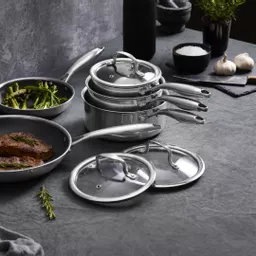
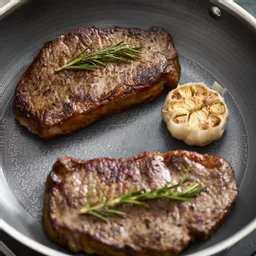
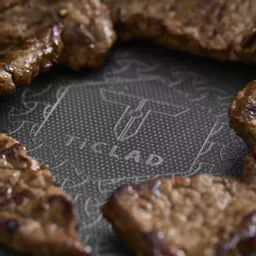
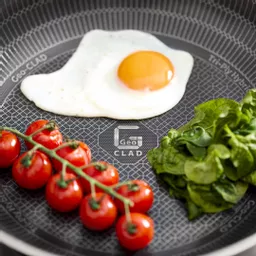
Tri-ply construction combines stainless steel with an aluminium core for strength and even heat. A laser-etched stainless-steel pattern creates raised areas that help deliver browning and searing performance, while ceramic non-stick sits within the recessed areas for easier food release and cleaning.
For Philippa, it is the combination rather than any individual technology that makes hybrid interesting:
“Consumers have traditionally had to make choices between different types of cookware: stainless steel for cooking performance or non-stick for convenience. Hybrid is interesting because it brings those benefits together. You get the heat performance and browning of stainless steel alongside the food release and ease of use people value from non-stick.”
Why the opportunity is growing
That combination is increasingly well matched to what consumers want from their cookware.
Exposure to recipe content, food creators and more adventurous home cooking means benefits such as browning, searing and heat control are increasingly relevant, while easy food release and cleaning remain important everyday requirements.
Philippa believes this is helping change what consumers expect from a pan:
“People are more interested in cooking performance than perhaps they once were. They see techniques like searing and browning constantly in the food content they consume, but they don’t suddenly want cookware that’s difficult to live with. The opportunity is to give them better results without taking away the convenience.”
At the same time, durability is becoming a bigger part of the value equation. Consumers increasingly consider not just what cookware costs, but how well it will continue to perform. Hybrid’s raised stainless-steel cooking surface helps protect the non-stick coating beneath, while its tri-ply construction provides a strong, stable pan structure.
Coating technology is also receiving greater attention. Growing awareness of PFAS and potentially harmful chemicals means some consumers are actively seeking cookware with PFAS-free alternatives, while still expecting the convenience of non-stick cooking.
Philippa sees these trends as connected rather than separate:
“Value in cookware isn’t simply about the lowest purchase price. If consumers can buy a pan that cooks well, is easy to use and is designed to maintain its performance for longer, that’s a very understandable value story. Add growing interest in what the cooking surface is made from, and you can see why this part of the category is attracting attention.”
Together, these trends make hybrid a particularly relevant proposition: better cooking performance, everyday convenience and cookware engineered to perform over time.
Tower’s approach to hybrid
Tower is extending its cookware portfolio with two complementary ranges that offer different expressions of hybrid technology, both positioned to deliver strong value within the hybrid cookware segment while retaining clear performance benefits.
Geo-Clad combines tri-ply stainless-steel construction with an aluminium core, a geometric laser-etched stainless-steel pattern and PFAS-free CeramiShield™ ceramic non-stick coating. Working together as one hybrid system, they deliver even heat, improved browning and searing, easy food release and everyday durability. Geo-Clad is backed by a 25-year guarantee.
Ti-Clad takes a more performance-led approach through Tower’s HyTech™ Advanced Hybrid Cooking System. Titanium-infused tri-ply construction, a precision chainlink laser-etched surface and PFAS-free CeramiShield™ Pro coating work together to deliver faster heat response, enhanced browning and searing, consistent food release and greater cooking control. Ti-Clad is backed by a lifetime guarantee.
For Philippa, having two propositions is important because the emerging hybrid opportunity isn’t confined to one type of shopper:
“We don’t see hybrid as a niche proposition that should sit at one very high price point. Geo-Clad is about confident, durable everyday performance, while Ti-Clad takes the technology further for consumers looking for enhanced performance, precision and control. It gives retailers the opportunity to build a genuine progression within hybrid cookware.”
What does it mean for retailers?
For retailers, hybrid offers more than another cookware material or finish. It provides a clear and demonstrable reason for consumers to trade up.
The opportunity is to keep that story simple: even heat, better browning and searing, easy food release and greater durability, delivered by technologies working together rather than a single feature.
And that demonstrability matters. Hybrid cookware gives retailers benefits that can be communicated visually in-store, online and through social content, from browning and searing through to food release and cleaning.
As Philippa concludes:
“The challenge for the industry is not to overwhelm shoppers with technology. If we can make hybrid easy to understand and show consumers what it actually does for their cooking, it becomes a very compelling proposition. For retailers, that’s the opportunity: a clear performance story, tangible reasons to trade up and a category that has the potential to appeal to a much broader cookware audience.”
As hybrid reaches a broader audience, the opportunity is about establishing it as a meaningful next step in mainstream cookware, combining tangible performance benefits with a value proposition consumers can understand.
To find out more about Tower’s upcoming Geo-Clad and Ti-Clad launches, speak to your RKW account manager or contact the sales team to discuss pre-order opportunities.
You can also view the range here: https://rkwltd.com/search?q=ti-clad+geo-clad